
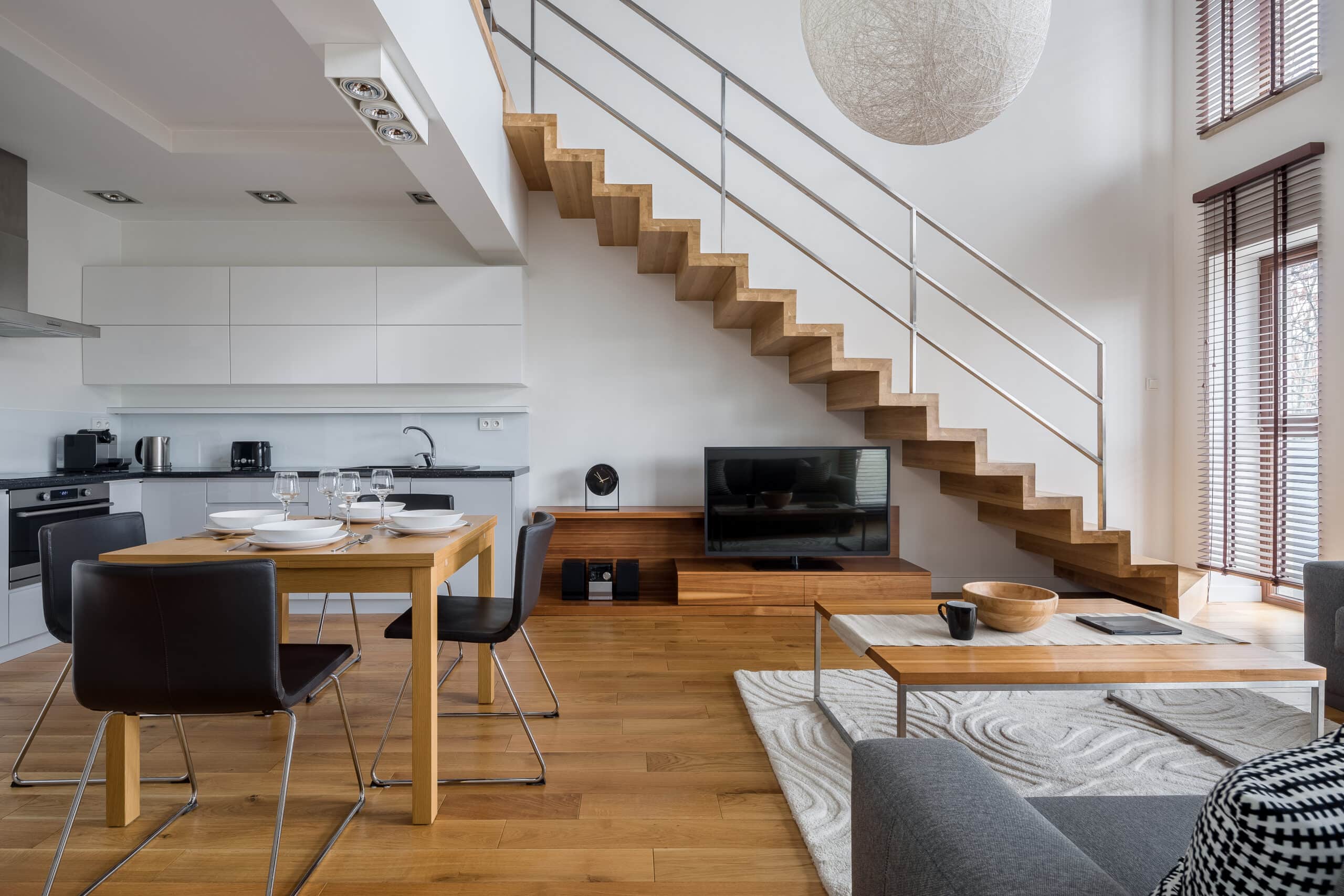
A loft apartment is a spacious, “open concept” living space typically found in repurposed industrial or commercial buildings. These apartments feature high ceilings, large windows, and exposed architectural elements like brick walls, ductwork, and beams.
Aside from the bathroom, which is always separate, no distinct rooms exist. Lofts are much larger, 1,000 to 2,000 square feet, than the size of a typical studio which ranges from 400 to 600 square feet.
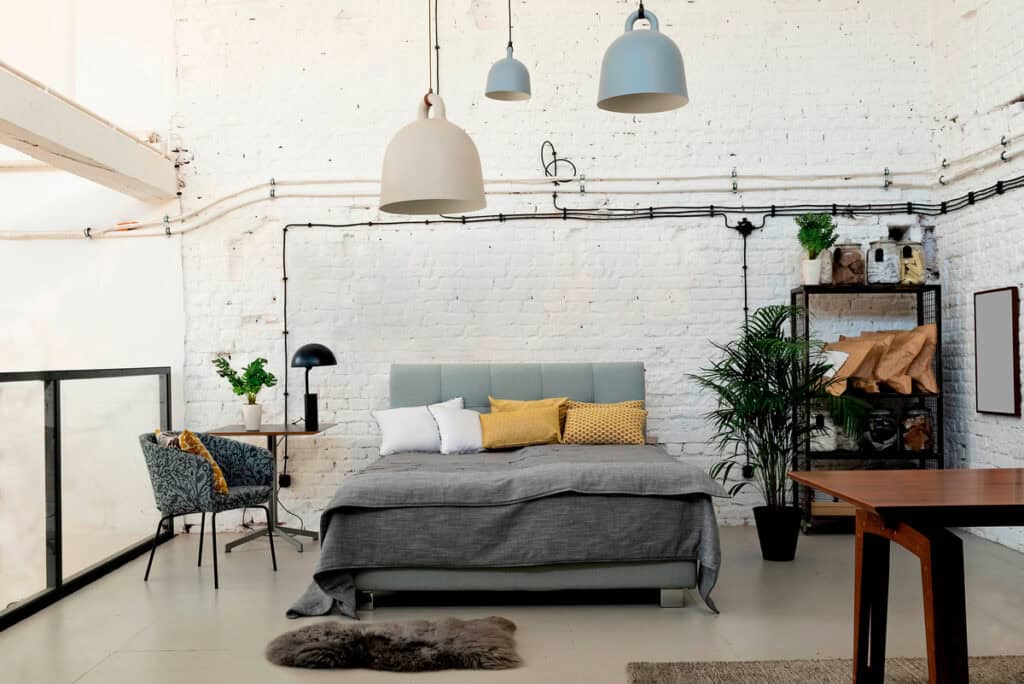
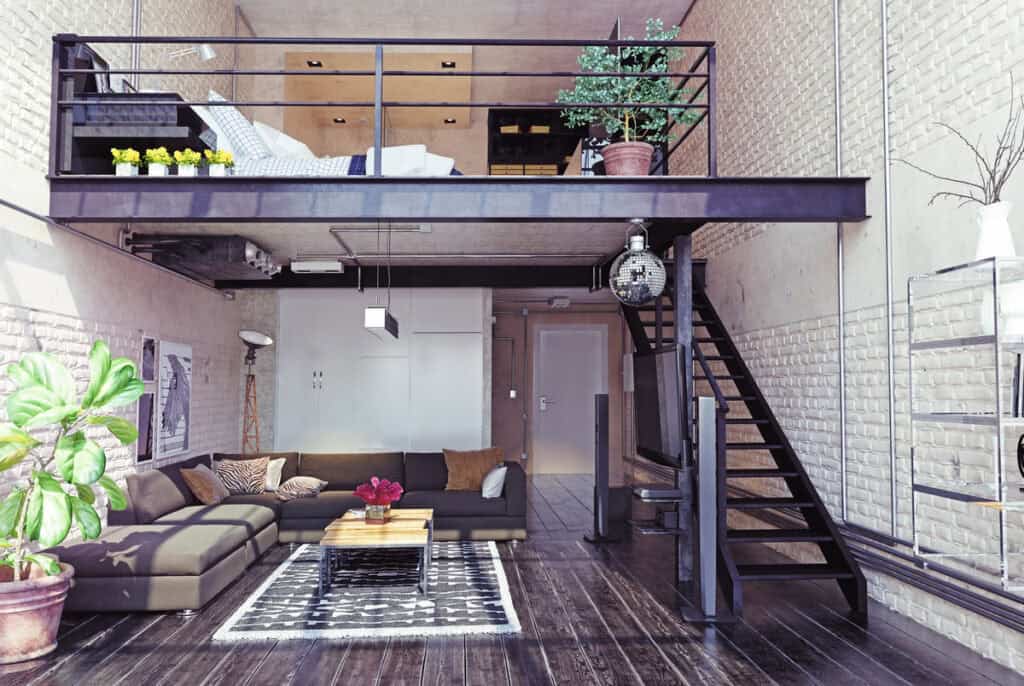
A loft space is an architectural feature within a house. It’s a mezzanine-like level or room that overlooks the main floor below it. A staircase connects the loft space, which can be used as a bedroom or a lounge, to the main floor.
Apart from lofts, many apartment design styles are available.
Differences Between Hard Lofts and Soft Lofts
There are two main types of lofts. “Hard loft” doesn’t refer to the flooring (although some are cement); rather the term refers to what is traditionally considered a loft space. This is the historic warehouse converted into apartments with exposed beams and ductwork, brick and support beams, and cement or hardwood floors (most often original).
Warehouses converted into lofts often have unique features from the period in which they were built, creating spaces with a rustic charm that many find irresistible. Hard lofts have a “cool” factor long associated with those who live and work from their loft space, traditionally artists and musicians.
Due to the limited supply of hard lofts (there aren’t many old warehouses waiting to be converted into apartments), new lofts are being built to meet demand. These new lofts are sometimes called “soft lofts.”
Soft lofts are newer constructions built to mimic that old-world industrial charm of hard lofts. These apartments also have high ceilings, large windows, and exposed brick. But unlike hard lofts, these apartments are designed to have these features.
Because they are newer, soft lofts offer some features you might not find with hard lofts. Soft lofts often have upgraded utilities, amenities, modern finishes, and popular features. Because they are designed from the ground up, soft lofts also tend to have community amenities like swimming pools and fitness centers.
Soft lofts, explicitly built with residents in mind, may offer more storage space. You will likely have closets and maybe even a pantry. Because they are modern buildings, they tend to be better insulated than hard lofts, which are often converted warehouses.
Advantages of Loft Apartments
- Lots of Space: Loft apartments are spacious and vast, with high ceilings and ample square footage. Whether you prefer minimal design or elaborate decor, you can fill the space as you wish. You can design individual living areas with as much privacy as you prefer using furniture, rugs, curtains, and partitions. You have plenty of room to move around and create a studio or work area.
- Live/Work Set-Up: Some lofts are zoned for residential and commercial use, meaning you can legally conduct business in these spaces. This might be a relevant advantage if you want to run a small business out of your home.
- Natural Light: Floor-to-ceiling windows let in bright outdoor light. You may not need to turn on artificial lights during the daytime, which could help lower the utility bill. Plus, natural light is a proven mood booster.
- Unique Aesthetic: The industrial charm of exposed brick, beams, and ductwork gives lofts a distinctive and trendy look.
- Location: Most “hard lofts” are in desirable neighborhoods. This is because many industrial areas have been updated with hip restaurants, trendy nightlife, and startup offices.
Disadvantages of Loft Apartments
- Lack of Privacy: The open floor plan means fewer walls and doors, which can be challenging for privacy, especially for families or roommates.
- Noise Issues: The open space and hard surfaces can lead to noise problems, both from within the apartment and from neighboring units.
- Heating and Cooling: High ceilings and large windows can make it challenging to maintain a consistent temperature, potentially leading to higher utility bills.
- Higher Cost: Loft apartments can be more expensive than traditional apartments due to their unique features and prime locations.
- Limited Storage. Hard lofts were not originally intended to be residences, so they often lack closets and other storage spaces that a typical apartment home would have.
- Limited Amenities. You may not find everything you want in a loft apartment. If having an apartment pool or an in-suite washer and dryer is a priority, you probably need to look elsewhere.
When to Look for a Loft Apartment
The best time to look for a loft apartment depends on seasonality. If you’re looking for lower rent prices and less competition, trends show that the best time to move is in December or January.
If you prefer to browse a larger selection of loft apartments and don’t mind competing with other prospects, start your search in spring or summer and apply as you wish. Check out our blog on the apartment rental application process—be sure to give it a read! Good luck!
For more on how to find the right place to live for your needs, visit our Renters Blog.