
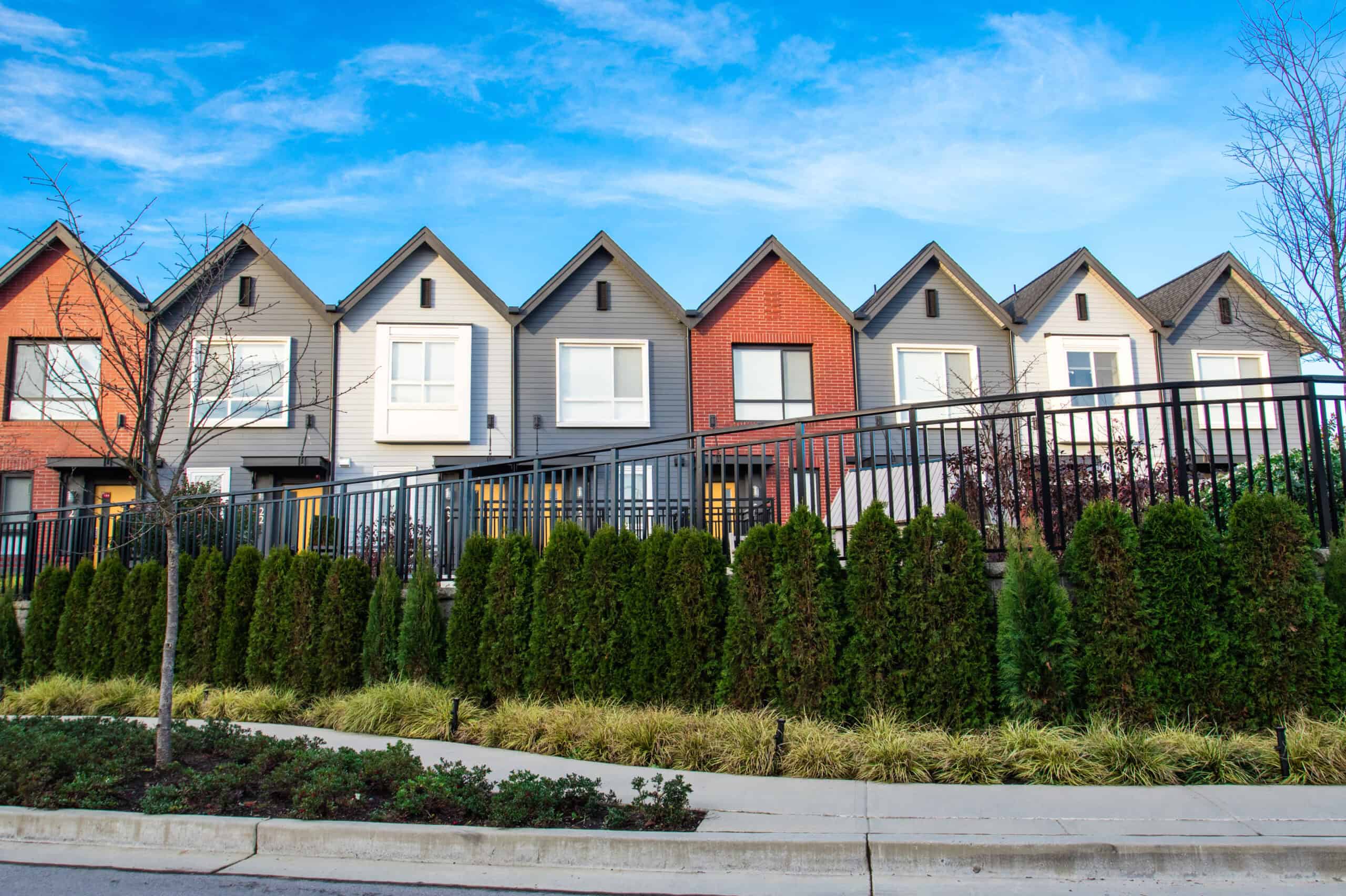
A townhouse is a type of residential building typically narrow and tall, sharing one or more walls with adjacent properties. These homes are often found in urban or suburban areas and are designed to maximize space. They usually feature multiple levels, with living areas on the ground floor and bedrooms on the upper floors.
Townhouses originated in cities but can now be found in suburbs and exurbs. While their popularity has ebbed and flowed over the decades, there are signs that townhouses are getting a new lease on life.
According to an analysis from the National Association of Home Builders, in 2020, townhouses comprised 11 percent of single-family new construction, down from nearly 14 percent in 2008. Then, in 2021, the number of new-build townhouses increased by over 28 percent over the previous year.
What is a townhouse?
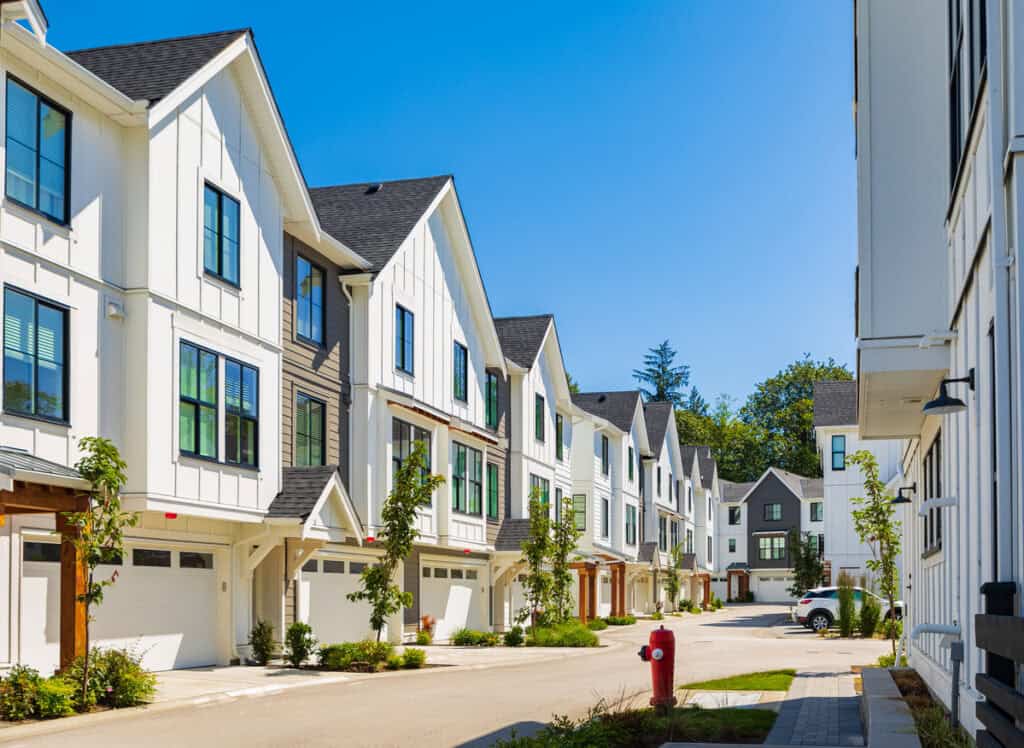
Technically, a townhouse could be any city dwelling, but the name usually applies to a style of multi-floor home that shares one or two walls with adjacent properties. Each has its own entrance and often a small front lawn and backyard. As the name suggests, townhouses are designed for high-density urban environments with tall and narrow silhouettes.
Today, townhouses in suburban areas are often attached to uniform residences belonging to a distinct community governed by its homeowners’ association.
Technically, townhouse refers to a style of residence. Traditional townhouses in cities are usually independently owned dwellings. A townhouse can technically be a condo if it’s part of a condominium community with the associated rights or planned-unit development (PUD). Condos can come in various styles, from multi-story townhouses to single-floor apartments within a large, multi-unit building.
Townhouses are sometimes referred to as rowhouses –but there are differences. “Rowhouse” implies the structure is identical to its neighbors, while townhomes can vary in design within the same townhouse community.
Their owner is typically their resident, but townhouses can be listed as rentals.
Advantages of Townhome Living
Cost: A townhouse can be less expensive than a detached single-family home in the same area, even if they have a similar square footage. But don’t expect their “rent per square foot” to be cheaper than “other” housing types.
Maintenance: A townhouse’s smaller size means that it requires less maintenance, especially in terms of yard work (little if anything to mow). If there’s an HOA, it might also take care of the exterior maintenance on the property.
Amenities: Townhouses built as part of a development might include shared facilities such as a pool, gym, or clubhouse.
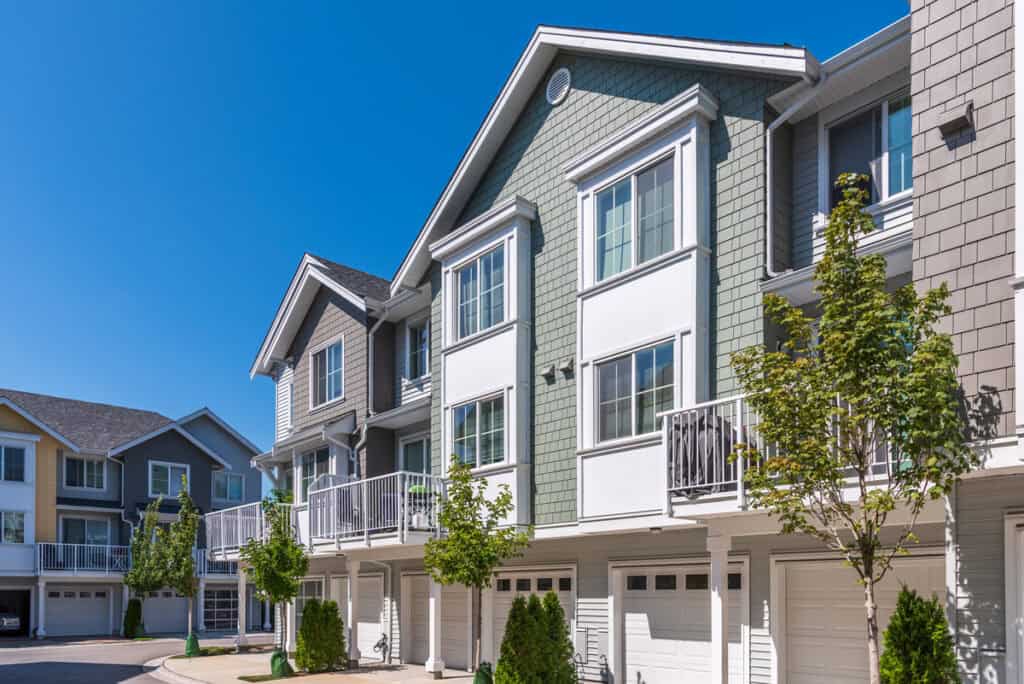
Outdoor space: Unlike apartments, townhouses often have access to a small amount of private outdoor space (a patio or lawn) and possibly a private garage.
Disadvantages of Townhome Living
HOA: Some people don’t like to live with an HOA’s restrictions, which charge monthly fees, something that must be factored into overall expenses unless they are covered in the lease. They can potentially range between $100 and $1,000 per month.
Noise pollution: Since you’ll likely be near your neighbors — those shared walls — you might have to deal with more noise and traffic.
Multi-floor living: Climbing stairs may not be sustainable for everyone.
Why Choose a Townhome
Townhomes are excellent options for homebuyers who enjoy living close to their neighbors or crave a compromise between a detached house and an apartment.
For more on how to find the right place to live for your needs, visit our Renters Blog.